
10/19/2016
Sweater Pilling got you Down?
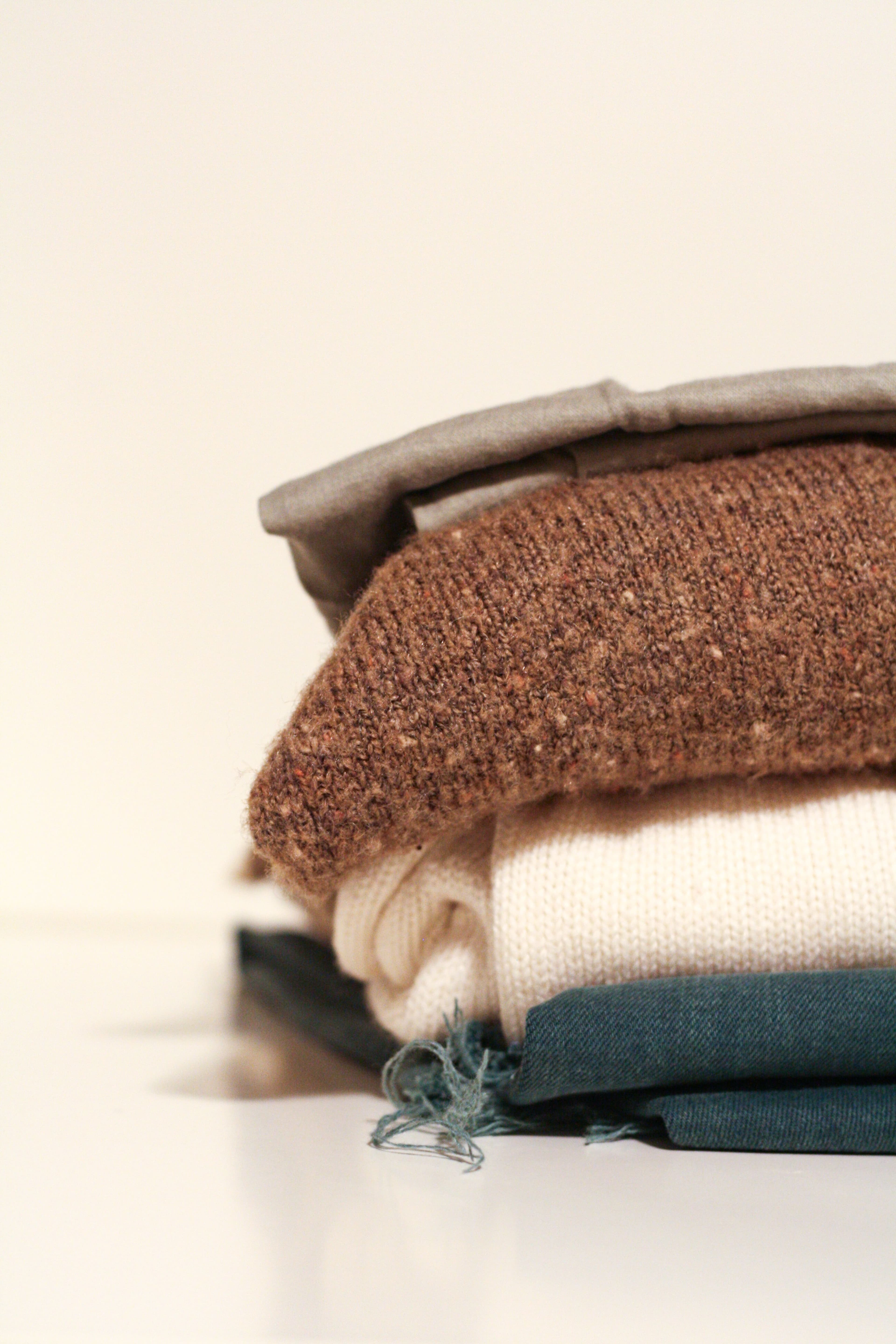
Sweater Pilling Got You Down? Why Sweaters Pill & What You Can Do About It
You buy a beautiful new sweater, wear it a handful of times and suddenly notice those annoying little fuzz balls appearing under the arms, along the sides, or across the front.
They're called pills, and here's something that surprises many people:
Even expensive wool and cashmere sweaters can pill.
Pilling isn't necessarily a sign of poor quality. It happens when loose fibres work their way to the surface of a fabric, become tangled through friction, and form those familiar little balls.
Why Do Sweaters Pill?
We once had a customer bring in several beautiful wool and cashmere sweaters because she was disappointed by how quickly they had started pilling.
She had invested in high-quality garments and understandably assumed that expensive sweaters shouldn't pill.
When we looked at the sweaters together, there was an interesting pattern. Most of the pilling appeared:
- Under the arms
- Along the sides
- Around the hips
- Near pockets
Those locations tell us a lot about what causes pilling: friction.
Every time fabric rubs against fabric—or against something else—fibres can loosen and tangle together.
Your Handbag and Seat Belt Could Be Part of the Problem
Some of the worst pilling happens exactly where our clothing encounters everyday friction.
A shoulder bag or crossbody strap can cause pilling along the shoulder or chest. Seat belts repeatedly rub against the same area. The sides of longer sweaters can rub against hips, pockets, desks, or chairs.
Even the natural movement of your arms against the sides of a sweater creates friction.
That's why you'll rarely see pilling distributed perfectly evenly across a garment.
Why Does Cashmere Pill?
Cashmere is wonderfully soft because of its extremely fine fibres—but those fibres can also be susceptible to pilling.
The quality and length of the fibres, how they're spun, the construction of the garment, and how the sweater is worn can all affect how much it pills.
Longer fibres can generally be spun more securely into yarn, leaving fewer loose ends available to work their way to the surface. Shorter fibres may be more likely to escape from the yarn and form pills.
But even excellent-quality cashmere can develop some pilling through normal wear.
So if your expensive cashmere sweater pills, don't automatically assume you've purchased a poor-quality garment.
Can You Prevent Sweater Pilling?
You may not be able to prevent it completely, but you can reduce unnecessary friction.
Give sweaters a rest between wears rather than wearing the same favourite several days in a row. Be aware of handbags and straps rubbing repeatedly against delicate knits, and avoid rough surfaces that can catch fibres.
Proper cleaning and storage are important too. Follow the manufacturer's care instructions and clean sweaters before putting them away for the season.
Should You Pull Pills Off a Sweater?
No matter how tempting it is, don't pick or pull pills off by hand.
The pill may still be attached to fibres within the yarn. Pulling it can tug those fibres out farther, potentially weakening the fabric and creating even more loose fibre.
Using the wrong razor or aggressive home de-pilling technique can also accidentally cut or damage the underlying knit.
Can Sweater Pilling Be Removed?
Yes. In many cases, professional de-pilling can dramatically improve the appearance of a sweater.
At Best Care, we care for wool, cashmere, and other knitwear using cleaning and finishing methods appropriate for the individual garment. We can also carefully remove surface pilling and block many sweaters to help restore their shape and appearance.
The goal isn't to make a well-loved sweater look artificially brand new—it's to safely remove excess surface pilling without damaging the knit underneath.
Don't Give Up on Your Favourite Sweater
A little pilling doesn't mean your favourite cashmere or wool sweater has reached the end of its life.
Often, it simply means you've been wearing it.
With proper cleaning, careful de-pilling, and a little attention to the sources of friction, a quality sweater can remain part of your wardrobe for many Winnipeg winters.
Before you replace it, let us take a look.
At Best Care, we care for what you wear.